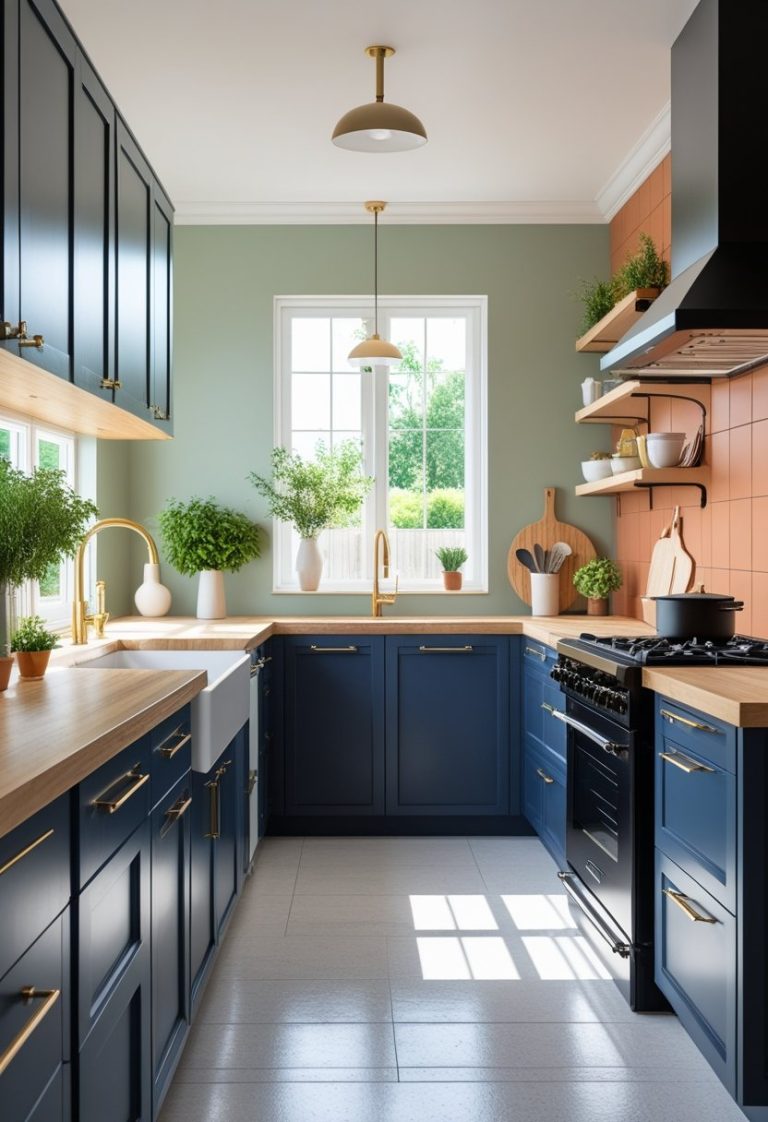
Sage Green Farmhouse Kitchen with Open Shelving & Cottagecore
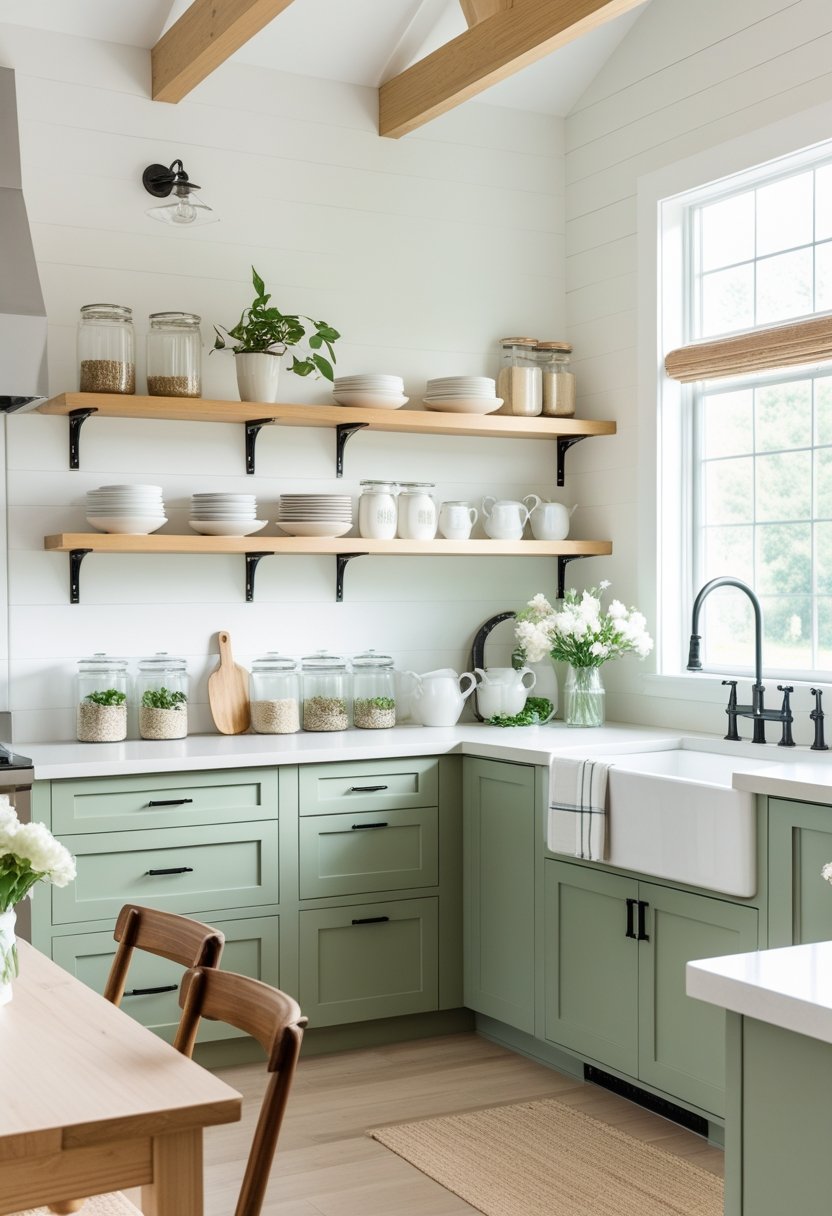
This bright and airy farmhouse kitchen showcases sage green cabinets that offer a calm, grounded look while enhancing natural light. The combination of soft green cabinetry, brass hardware, and open wood shelving creates a balanced blend of warmth and modern simplicity, making the space both functional and inviting. A white farmhouse apron sink under a large window emphasizes the kitchen’s fresh, open feel.
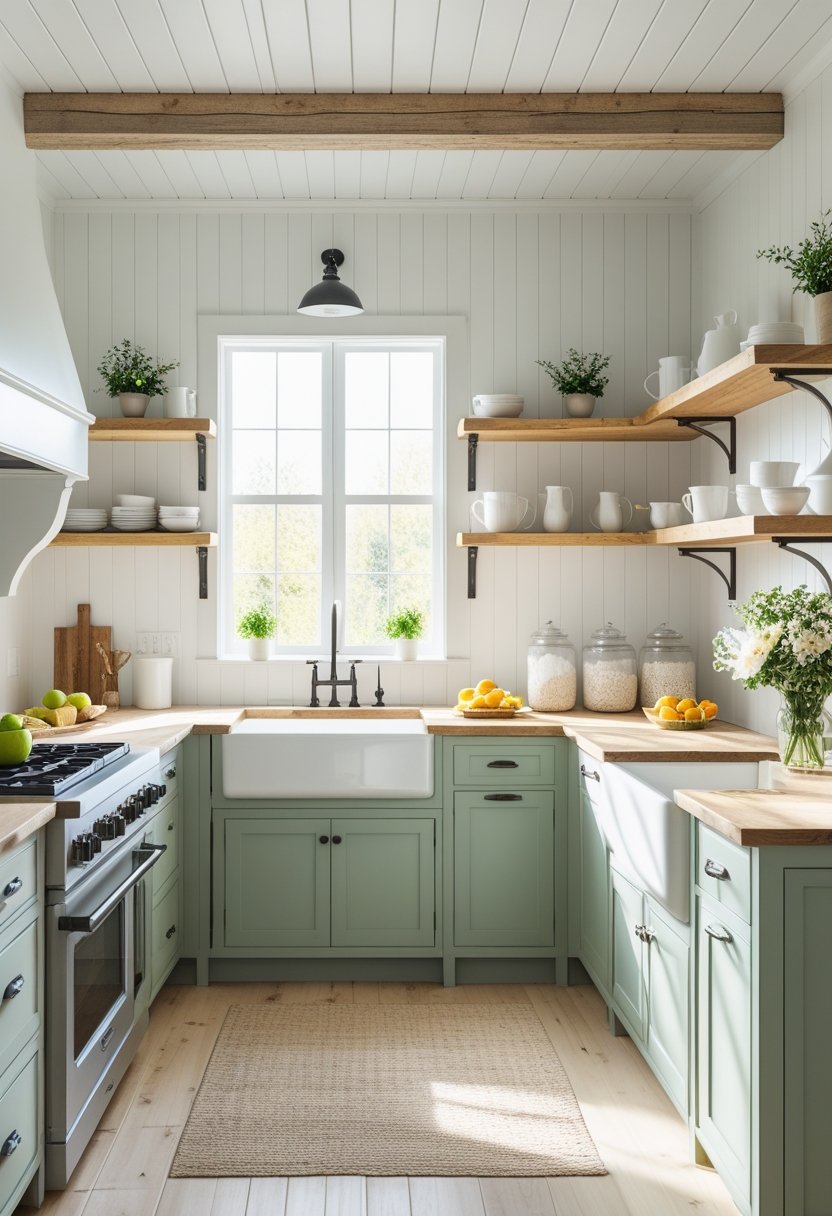
Floating wood shelves display a thoughtful selection of everyday essentials and decorative items, reinforcing the kitchen’s stylish yet practical aesthetic. Timeless subway tile and natural wood accents complement the overall design, introducing subtle texture and softness that maintain a cozy farmhouse atmosphere.
Drawing from Scandinavian minimalism and classic cottage charm, this kitchen uses natural materials and muted tones to foster an environment that appeals to both cooking enthusiasts and design lovers. It effectively marries rustic elements with clean, contemporary lines to create a welcoming, versatile space.
Sage Green Cabinets: The Heart of the Farmhouse Kitchen
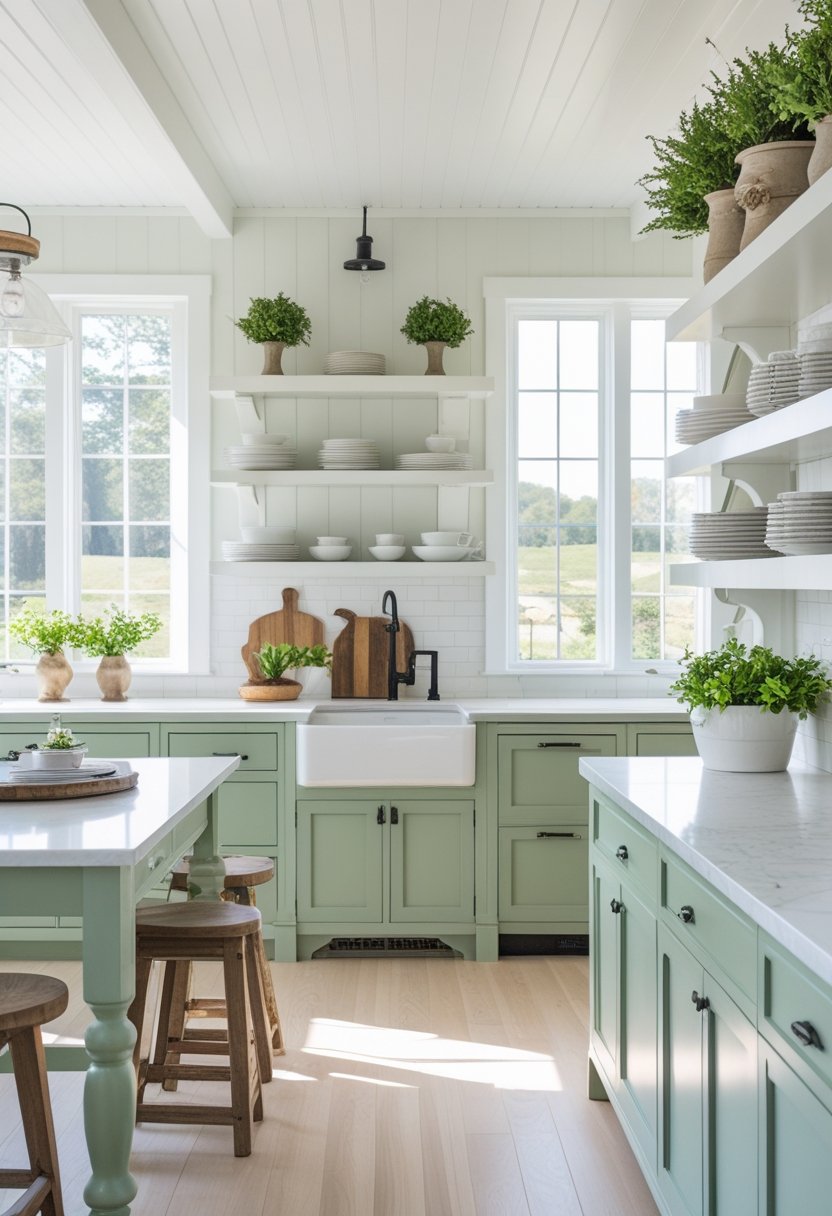
Sage green cabinetry creates a distinctive centerpiece in farmhouse kitchens. Selecting the right shade, cabinet style, and thoughtful placement as islands or accent walls helps shape the overall mood and function of the space.
Choosing the Perfect Sage Green Shade
Sage green ranges from soft grayish-green to deeper, earthy tones. Lighter shades brighten the kitchen, reflecting natural light and creating a fresh, open atmosphere. Darker sage greens add depth and a grounded, rustic feel without overwhelming the space.
Consider undertones carefully: grayish-green works well with cool, modern elements, while yellow-green hues pair naturally with warm woods and brass hardware. Matte finishes emphasize a natural look, while semi-gloss provides subtle reflectivity, enhancing durability.
Sampling paint or cabinetry options in the kitchen’s lighting conditions before purchase minimizes mismatches. Choosing a shade that harmonizes with walls, countertops, and flooring ensures a cohesive design.
Shaker vs. Flat-Panel Sage Green Cabinets
Shaker-style sage green cabinets bring a classic farmhouse feel with recessed paneling and clean lines. They add texture and craftsmanship without clutter, blending well with open shelving and vintage accents.
Flat-panel sage green cabinets offer a sleek, minimalist look suited for modern farmhouse kitchens. Their smooth surfaces highlight the color itself and can visually expand smaller kitchens by reducing visual detail.
Both styles benefit from quality hardware; brass or matte black pulls complement sage green cabinetry. Deciding between the two depends on whether the kitchen’s design leans traditional or contemporary, balancing style with personal preference.
Sage Green Islands and Accent Walls
Using sage green on kitchen islands can create a striking focal point that anchors the space. Contrasting the island with lighter perimeter cabinets enhances visual interest and defines functional zones.
Sage green accent walls or backsplashes extend the cabinetry’s presence without overpowering. This strategy ties in with wood elements and open shelving, maintaining farmhouse warmth.
Incorporating sage green in varied kitchen elements allows for layered texture and color, enriching the overall aesthetic. This approach supports the blend of rustic and modern tones typical of farmhouse kitchens.
Blending Organic Warmth: Wood and Natural Textures
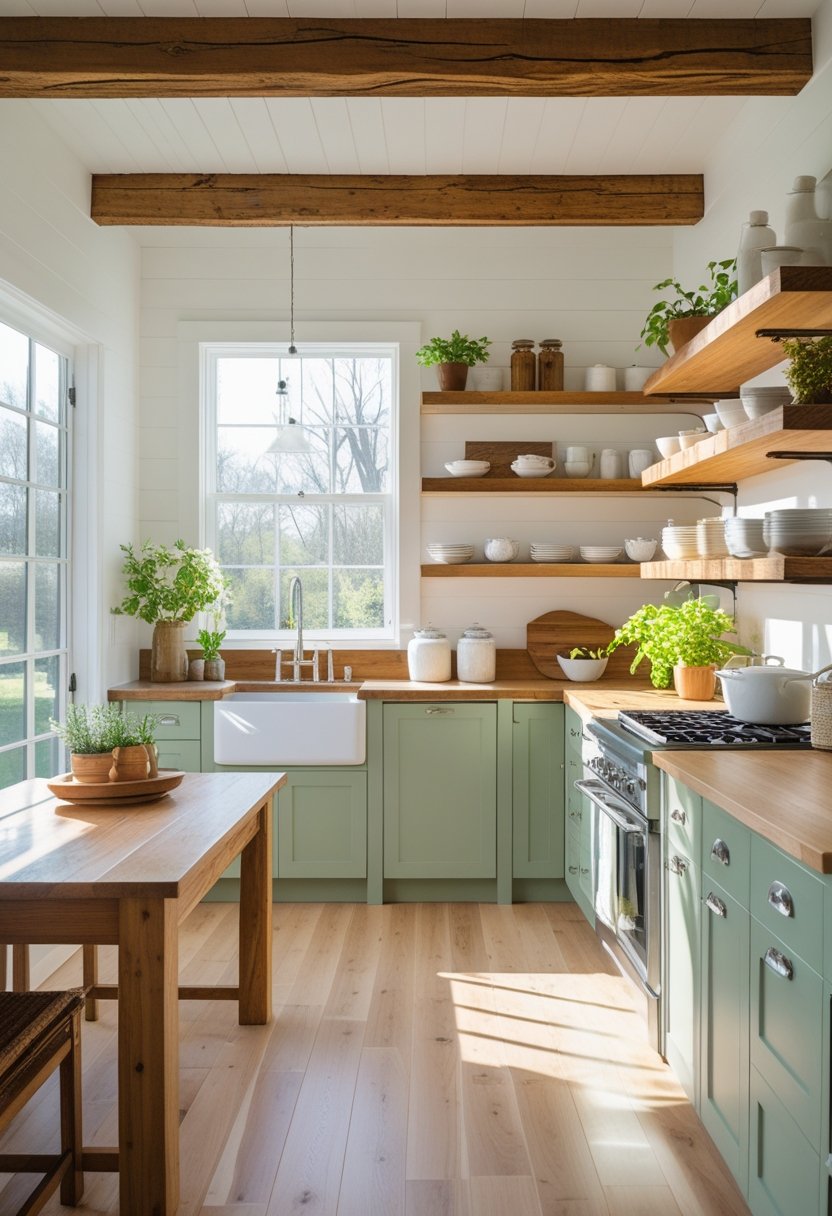
This kitchen draws on natural wood materials and soft neutral tones to balance functionality with inviting warmth. Carefully chosen wood surfaces and accents create tactile appeal, while understated colors enhance the sense of calm and cohesion. These elements work together to anchor the space within its farmhouse style without overpowering its brightness.
Butcher Block Countertops and Wood Accents
Butcher block countertops provide both durability and organic texture, complementing the sage green cabinetry. The warm wood grain contrasts with smooth surfaces like the subway tile backsplash, adding depth without clutter. A wood island often serves as a centerpiece, offering a tactile workspace and uniting the kitchen’s rustic-modern elements.
Wood accents, including smaller details like utensil holders or tray displays, extend this natural theme. Brass hardware paired with wood tones enhances a balanced mix of softness and sophistication. These choices maintain visual interest while supporting practical kitchen needs.
Reclaimed Wood Elements
Reclaimed wood introduces character and history, enriching the kitchen’s atmosphere with rustic authenticity. It’s commonly used in floating shelves or as a butcher block alternative, showcasing natural imperfections that add depth. This sustainable choice also aligns with farmhouse values, marrying environmental awareness with classic design.
Integrating reclaimed wood avoids overwhelming the space, keeping it light and airy. The pieces are often treated to highlight their grain and texture while blending with other materials. Reclaimed wood on shelving or accent panels emphasizes craftsmanship and organic imperfection in a controlled, elegant way.
Natural and Soft Neutral Color Palettes
Soft neutral hues, such as buttermilk or off-white walls, are key to framing the bolder sage cabinetry. These gentle colors reflect natural light, preventing the kitchen from feeling heavy or closed in. The palette extends to textiles, with rugs or curtains in beige or light gray supporting a cozy, understated vibe.
Combining sage green with soft neutrals elevates the organic warmth without losing brightness or clarity. This muted background allows wood textures and brass fixtures to stand out. The result is a balanced color story that anchors the kitchen visually and emotionally, inviting lengthy use and enjoyment.
Farmhouse Charm with Modern Details
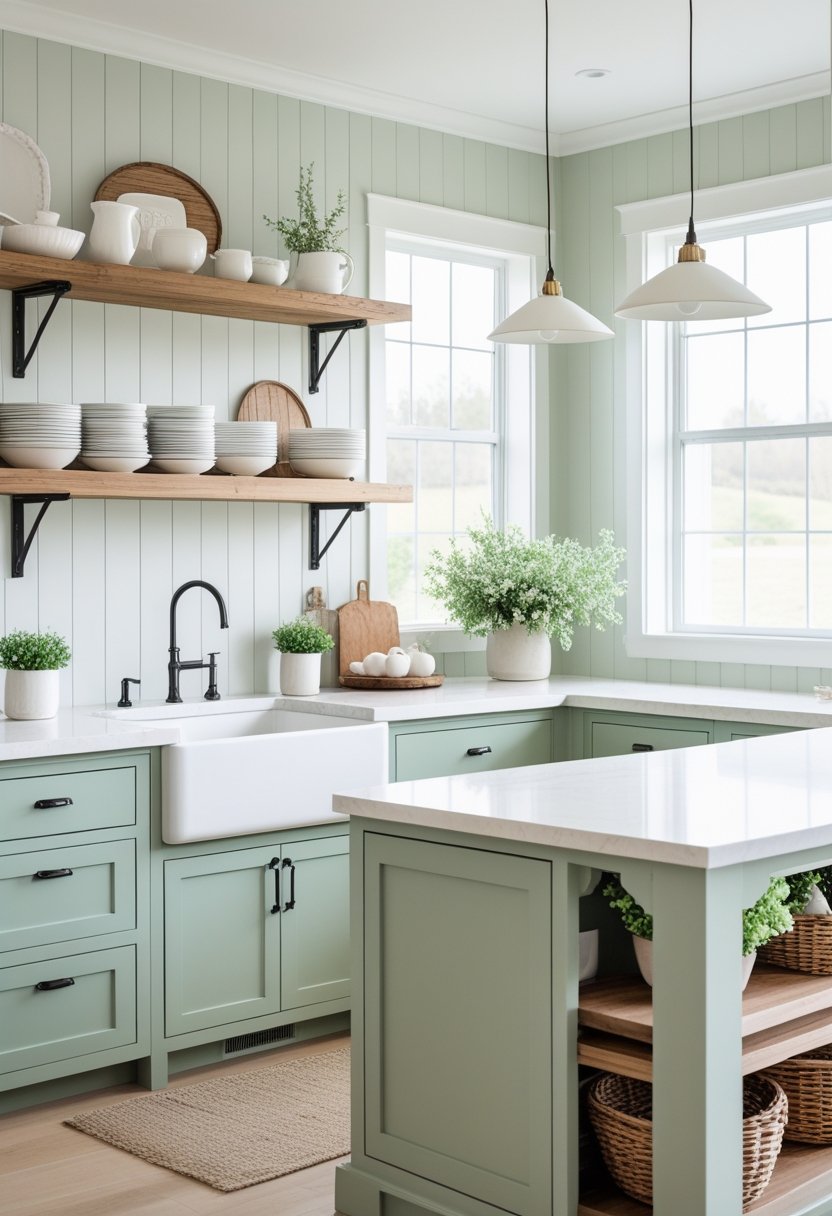
This kitchen balances the warmth of farmhouse style with sleek, functional elements. Key features like a classic apron-front sink, ample natural light from large windows, rustic wood shelving, and exposed beams combine to create a space that is both inviting and practical.
Apron-Front Farmhouse Sink and Large Windows
The apron-front farmhouse sink is central to this kitchen’s design. Known for its deep basin and exposed front panel, it merges classic style with usability. This type of sink facilitates easy washing of large pots and pans, making it ideal for serious cooking.
Positioned beneath large windows, the sink benefits from abundant natural light. The windows not only brighten the workspace but also connect the indoors to the outdoors, enhancing the airy atmosphere. These oversized windows emphasize simplicity and offer clear views, underscoring the room’s inviting, functional design.
Rustic Open Shelving Ideas
Open shelving in this kitchen uses reclaimed wood, adding a tactile, rustic element. These shelves show off carefully selected items like ceramic bowls, vintage cutting boards, and potted plants, which blend practicality with decorative appeal.
The open design encourages accessibility and keeps essentials visible. Wood tones on the shelves complement the sage cabinetry, reinforcing the farmhouse feel while avoiding clutter. This approach modernizes storage, offering a mix of charm and efficiency.
Exposed Beams and Ceiling Treatments
Exposed wooden beams are a defining architectural detail that reinforces the farmhouse kitchen’s authenticity. Their natural texture contrasts with smoother surfaces like cabinetry and countertops, creating visual interest without overpowering the space.
These beams typically feature a rough-hewn, unfinished look, providing warmth and structural character. Ceiling treatments combining beams with light paint or whitewash maintain brightness while highlighting traditional elements. This balance strengthens the overall farmhouse charm with subtle modern refinement.
On-Trend Open Shelving Styling
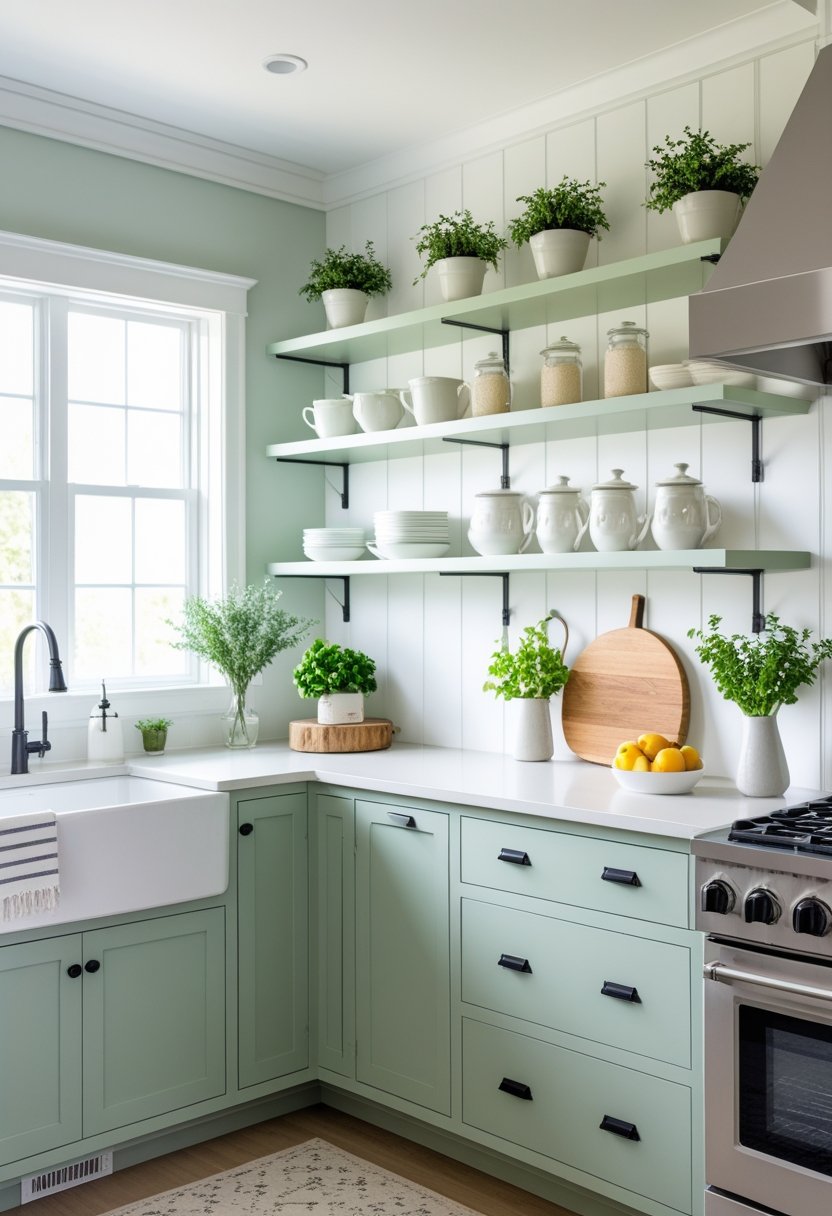
This kitchen emphasizes carefully chosen open shelving elements that balance function and visual appeal. The use of natural wood, soft neutral tones, and handpicked accessories creates an inviting yet refined display. Each piece on the shelves contributes to the overall feel, making the space both practical and attractive.
Floating Wood Shelves
Floating wood shelves serve as the primary structure for open shelving in this kitchen. Their clean lines and natural finish add warmth without overpowering the space. These shelves are typically installed at eye level, allowing easy access to everyday items while highlighting decorative pieces.
The wood’s texture contrasts subtly with smoother surfaces like the subway tile backsplash and cabinetry. This contrast adds depth and interest while maintaining a cohesive farmhouse aesthetic. Because floating shelves lack visible brackets, they contribute to a light, uncluttered look that enhances the kitchen’s airy feel.
Decorating with Neutral Dishware and Potted Plants
Neutral dishware in shades of white, cream, or soft gray forms the foundation of shelf styling. These pieces blend seamlessly with the sage green cabinets and wooden shelves. Their simplicity sets off more textured elements and avoids visual clutter.
Potted plants add life and color, reinforcing the natural theme. Small herbs or leafy greenery placed in simple containers soften the hard edges of ceramics and wood. Together, these elements create a balanced aesthetic that feels fresh and grounded, while supporting a functional kitchen environment.
Vintage and Handmade Accessories
Incorporating vintage and handmade items brings character and authenticity. Items like weathered cutting boards, handcrafted bowls, or antique glassware offer visual interest through unique shapes and textures. These pieces introduce a sense of history that complements the modern, minimalist structure.
The choice of accessories is deliberate, focusing on quality over quantity. Each item serves a purpose or tells a story, making the open shelves not only storage but also an artful display. This thoughtful curation is key to achieving a farmhouse look that feels both lived-in and intentional.
Countertops and Backsplashes for a Light & Airy Look
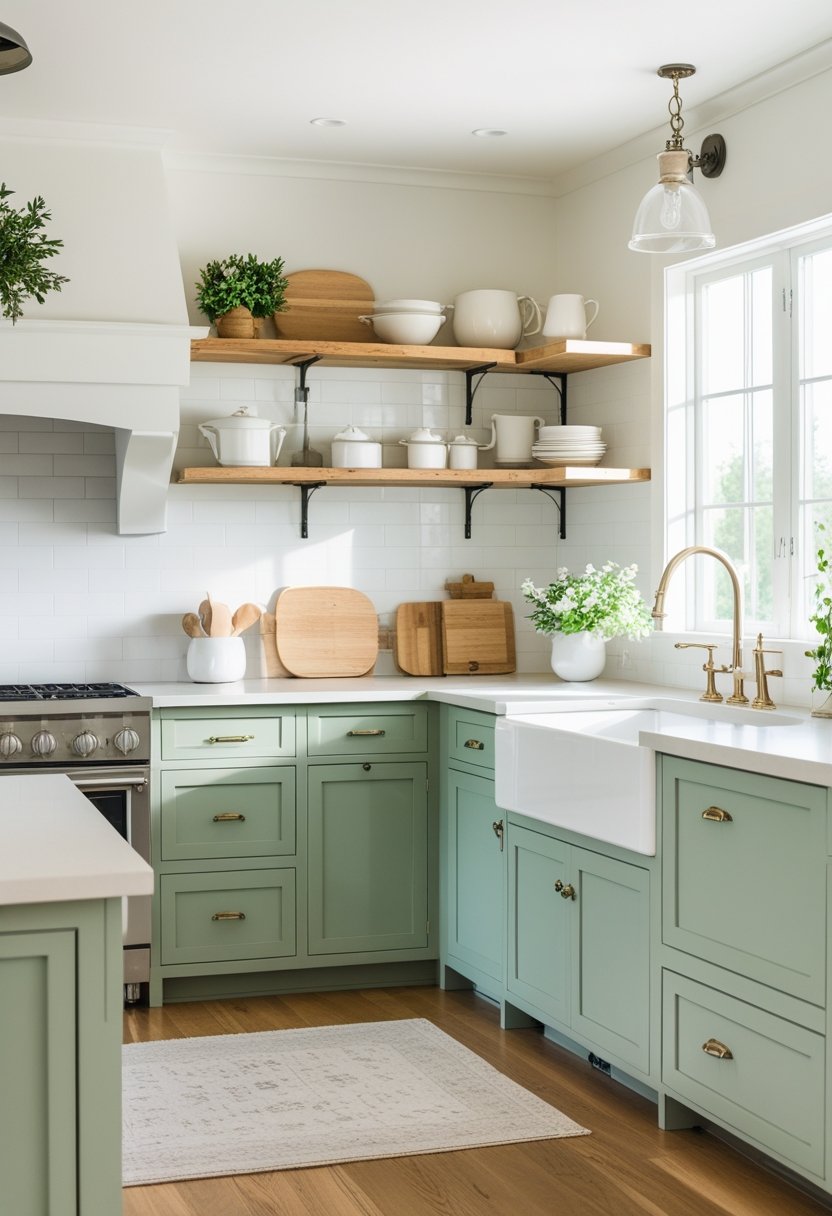
The right choice of countertops and backsplashes enhances the open, bright feel typical of farmhouse kitchens with sage green cabinets. Combining light-reflecting surfaces and subtle texture balances practical durability with visual appeal.
White and Marble Countertops
White countertops are a staple for creating brightness and contrast against sage green. They reflect natural light and keep the space feeling open and fresh. White marble countertops add a refined element with their gentle veining, introducing natural patterns without overwhelming the palette.
Marble’s smooth surface complements farmhouse design while maintaining a subtle elegance. It pairs well with brass hardware and wooden accents, tying in rustic and modern details seamlessly.
Despite its porous nature, white marble countertops work well in this setting if properly sealed and maintained. The light color choice supports an airy atmosphere and coordinates easily with different cabinet shades.
Subway Tile and Textured Backsplashes
The classic white subway tile backsplash is ideal for a farmhouse kitchen seeking timeless simplicity. It visually expands the space and offers a clean, uniform backdrop for the sage green cabinets.
Textured backsplashes, such as those with beveled edges, hand-painted tiles, or patterned relief, add visual interest without disrupting the kitchen’s calm feel. They provide depth and subtle tactile variation, contributing a handcrafted look that fits farmhouse and Scandinavian styles.
White subway tile backsplashes are also practical, durable, and easy to clean, making them fitting for a busy kitchen while maintaining style and brightness.
Mixing in Granite or Quartz Surfaces
Granite countertops offer a more varied, natural pattern that adds character while still supporting a light and airy design. Lighter granite varieties enhance brightness, whereas black granite countertops create a dramatic contrast that can ground the space if balanced carefully.
Quartz countertops bring versatility, offering engineered consistency with a variety of light tones that complement sage green cabinetry. Quartz’s low maintenance and resistance to staining make it a pragmatic choice for kitchens focused on functionality.
Both granite and quartz can be chosen to echo subtle flecks or veining in the backsplash or cabinetry, creating harmony. Selecting the right surface depends on the desired balance of texture, pattern, and ease of upkeep.
Finishing Touches: Hardware, Fixtures, and Accents
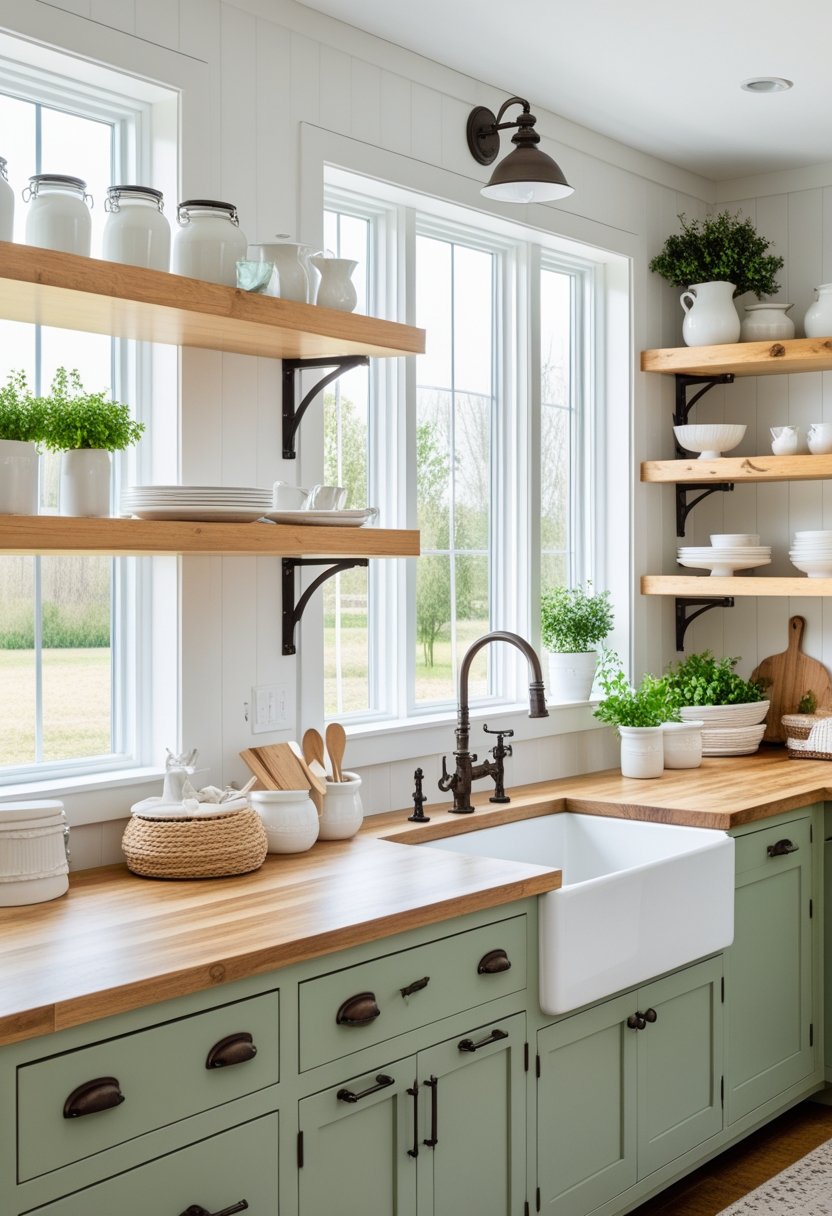
The combination of carefully chosen hardware, lighting, and decorative accents completes the farmhouse kitchen’s look. These elements must balance style and function to enhance the space’s airy, cozy atmosphere without overwhelming it.
Brass, Gold, and Matte Black Hardware
Brass and gold hardware provide warmth and subtle luxury to sage green cabinets. These finishes work well for drawer pulls, cabinet knobs, and faucet fixtures, adding a timeless quality that complements natural wood accents.
Matte black hardware offers a modern contrast while maintaining sophistication. It pairs nicely with white accents, such as countertops or farmhouse sinks, creating clean lines and visual interest. Mixing matte black with brass or gold pieces can emphasize key details without clashing.
Choosing hardware with simple shapes supports the kitchen’s minimalist vibe. Rounded edges and slim profiles keep focus on the soft green cabinetry and natural textures, reinforcing the space’s balanced look.
Lighting Fixtures and Under-Cabinet Lighting
Glass pendant lights are ideal above kitchen islands or dining tables, providing focused illumination and enhancing the open, airy feel. Clear or frosted glass options keep light soft and unobtrusive.
Under-cabinet lighting adds practical task lighting while brightening the workspace. Warm LED strips work well for this purpose, highlighting the sage green cabinets and subway tile backsplash without harsh glare.
Layering ambient and task lighting creates depth. Recessed ceiling lights or small chandeliers can complement pendants and under-cabinet lights, ensuring the kitchen remains bright throughout the day and evening.
Rugs, Accessories, and Styling Tips
A thoughtfully chosen rug grounds the space and adds softness underfoot. Neutral tones with subtle textures, such as woven or flatweave rugs, bring warmth without competing with cabinet colors.
Accessories should be curated and minimal. Open shelving in this kitchen is styled with simple ceramic bowls, vintage cutting boards, and potted greenery to enhance farmhouse charm.
White accents, like linen towels or decorative ceramics, brighten the shelves and contrast gently with green cabinetry. Mixing these with warm wood and brass pieces keeps the overall aesthetic cohesive and inviting.
Complementary Elements and Modern Adaptations
This kitchen carefully balances traditional farmhouse features with contemporary updates to enhance both function and style. Each element integrates seamlessly, contributing to a cohesive and practical space that meets modern needs while retaining classic appeal.
Stainless Steel Appliances and Modern Features
Stainless steel appliances offer a sleek contrast to the soft sage green cabinetry. Their reflective surfaces add brightness without disrupting the kitchen’s warm palette. Appliances like a modern range hood, built-in ovens, and energy-efficient refrigerators provide advanced functionality to support everyday cooking.
These features bring a polished, streamlined look while simplifying maintenance. Controls and digital interfaces on the appliances increase convenience and precision. Incorporating these modern elements ensures the kitchen remains highly efficient alongside its farmhouse charm.
Glass-Front Cabinets and Crown Molding
Glass-front cabinets introduce visual interest by breaking up solid cabinetry with translucent panels. This design reveals carefully arranged dishware or glassware, enhancing the kitchen’s open and airy feel. They also encourage organization and elevate the cabinetry beyond purely functional storage.
Crown molding atop the cabinets adds architectural detail. It frames the ceiling transition, lending refinement and height to the space. Together, glass-front doors and crown molding blend traditional craftsmanship with a lighter, more contemporary presentation.
Versatile Islands and Storage Solutions
The kitchen island acts as a multifunctional centerpiece. It provides additional prep surface, casual dining space, and targeted storage. Options often feature drawers, shelves, or built-in wine racks to maximize usability in a compact footprint.
Islands with wood tones complement the floating shelves and wooden dining table, reinforcing the natural texture scheme. Modular designs with adjustable components accommodate various activities, supporting both entertaining and daily meal prep with ease.