Sage Green Living Room Ideas for Elegant & Modern Interiors
The sage green living room decor offers a serene and sophisticated environment by blending soft tones with elegant textures. This monochromatic palette, combined with tufted seating, vintage-inspired rugs, and botanical chandeliers, creates a calm and cohesive atmosphere reflecting modern interior color trends. The use of sage green on walls, curtains, and furniture establishes a harmonious space that balances tranquility with timeless style.
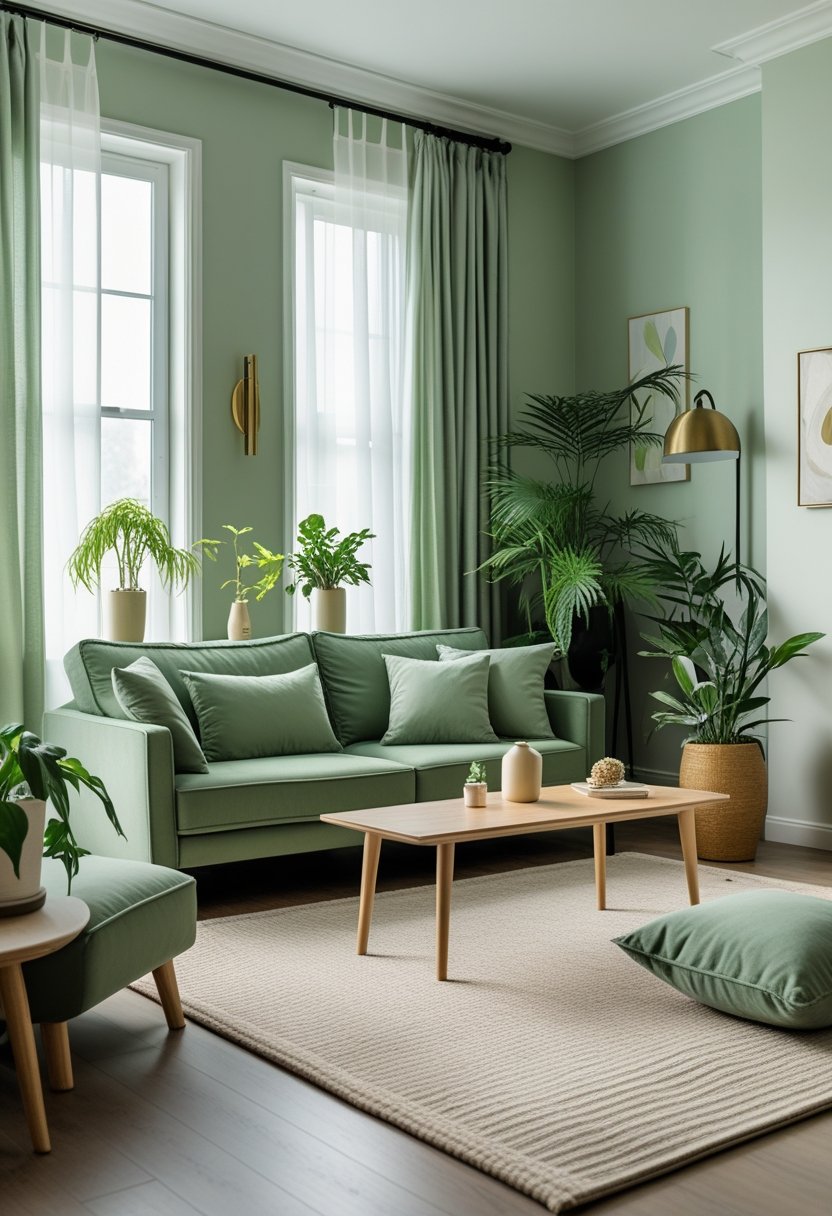
This design approach suits those aiming for a fresh yet classic look, whether updating a single room or undertaking a complete makeover. The emphasis on a color-drenched interior shows how sage green can be both versatile and impactful, making it a compelling choice for contemporary homes.
Sage Green Living Room: Modern Color Trends and Palette

Sage green has become a prominent choice for living room design due to its balance of softness and sophistication. It offers flexibility through various shades and combinations, making it suitable for both subtle and bold interiors. Key considerations include how to apply monochromatic schemes, explore different hues of sage, and pair the color with complementary neutrals.
Monochromatic Color Schemes
Using a monochromatic palette with sage green emphasizes depth and texture without introducing distracting contrasts. This approach layers multiple tones of sage—ranging from light, silvery greens to deeper gray-greens—on walls, upholstery, and accessories. The result is a cohesive, soothing environment that feels intentional and calming.
Furniture like tufted sofas or linen curtains in varying intensities of sage enriches the space with subtle tonal differences. Incorporating textures such as velvet or natural fibers adds dimensionality, preventing monotony while keeping the palette unified. This strategy is effective for creating a modern, tranquil living room that feels both refined and inviting.
Different Shades of Sage
Sage green is not a single color but a spectrum that includes muted, dusty greens mixed with gray or beige undertones. Its versatility stems from this range, which can suit diverse living room styles—from rustic to contemporary.
Lighter shades of sage impart softness and brightness, ideal for smaller spaces or rooms requiring more light. Darker sage tones anchor larger areas with a more dramatic, cozy effect. Medium shades create an excellent middle ground, offering both warmth and neutrality. Choosing the right shade depends on the desired mood and lighting conditions within the living room.
Pairing Sage Green with Neutral Tones
Sage green pairs naturally with neutral colors, creating a balanced, timeless look. Common partners include warm whites, soft beiges, and pale grays, which support sage’s calming properties without overpowering it.
Decor elements like vintage-inspired rugs or wooden accents complement the green, enriching the living room’s texture and grounding its palette. Whites highlight the freshness of sage, while beiges add warmth. Incorporating these neutrals helps maintain versatility, allowing the living room to adapt easily to changing trends or personal style shifts.
| Neutral Tone | Effect with Sage Green |
|---|---|
| Warm White | Brightens and freshens the space |
| Beige | Adds warmth and subtle contrast |
| Pale Gray | Enhances modernity and coolness |
This neutral pairing strategy supports creating a timeless, serene living room that fits various design aesthetics.
Creating a Calm and Cohesive Atmosphere
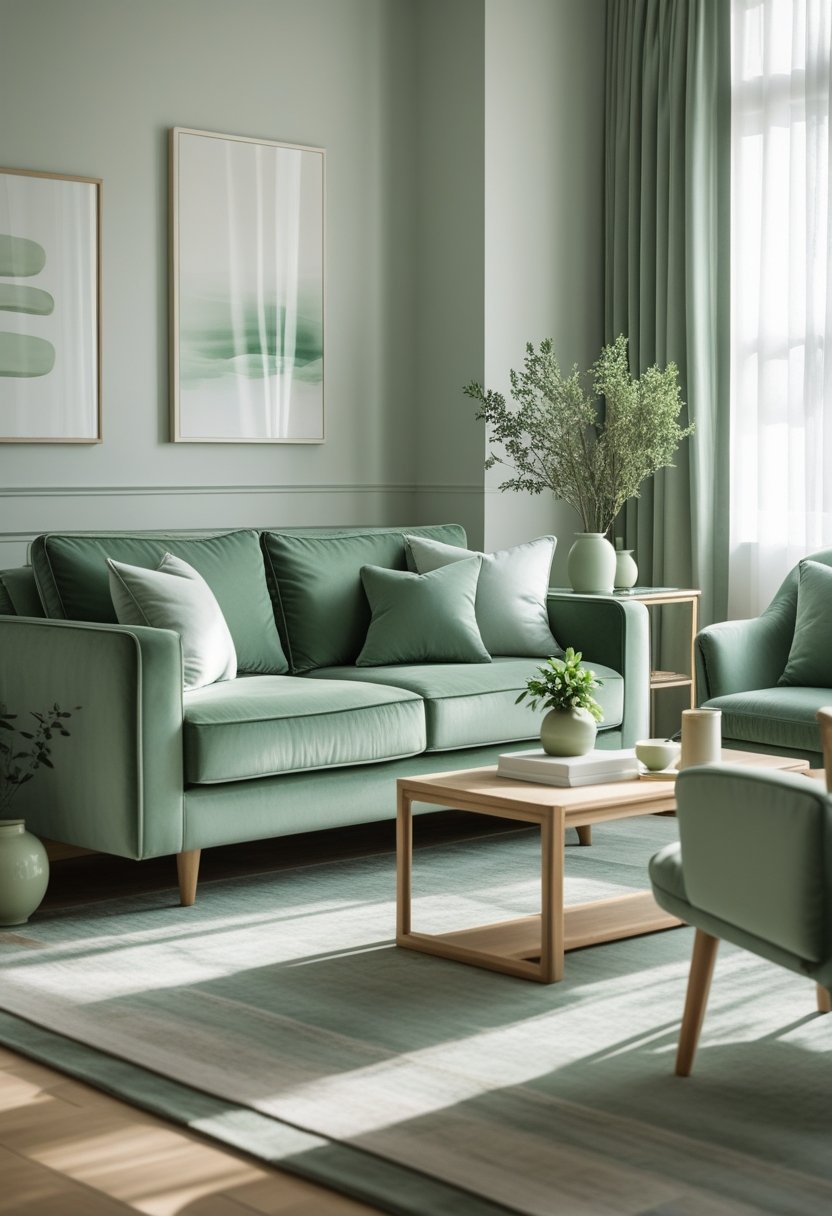
A serene living room relies on careful attention to texture, lighting, and textiles. When combined thoughtfully, these elements build a space that feels both inviting and unified.
Layered Textures for Visual Depth
Layering different textures adds dimension and interest without overwhelming the calm sage green palette. Combining materials like a soft velvet sofa with a jute rug introduces natural warmth and subtle contrast.
Tufted seating enhances tactile appeal and gives the room a plush, cozy feel. Adding a vintage-inspired rug with a muted pattern grounds the space while complementing the monochromatic scheme.
This mix of velvet, natural fibers, and woven textures invites touch and creates a tangible sense of comfort. By balancing smooth and rough surfaces, the design avoids flatness and enhances visual depth.
Soft Lighting Choices
Soft, diffused lighting is essential to maintaining the room’s tranquil mood. Fixtures like a botanical chandelier provide gentle illumination that draws the eye without harshness.
Layered lighting sources such as table lamps, floor lamps, and wall sconces help control brightness and create areas of warmth. Using warm white bulbs rather than cool tones promotes relaxation.
Natural light should be maximized with sheer curtains that filter sunlight softly. This approach prevents glare while preserving energy and enhancing the connection between indoors and outdoors.
Harmonious Use of Textiles
Textiles create cohesion through color and pattern while improving comfort. Patterned throw pillows in complementary shades of sage and neutrals introduce subtle visual interest.
Smooth curtain fabrics echo the design’s clean lines, while textured cushions carry the layered feel across different surfaces. Using consistent colors in upholstery, curtains, and décor helps unify the room.
Incorporating cozy materials like linen, cotton, and wool lends softness and invites users to linger. Thoughtful textile choices reinforce both the soothing atmosphere and the sophisticated style.
Sage Green Furniture and Statement Decor Elements
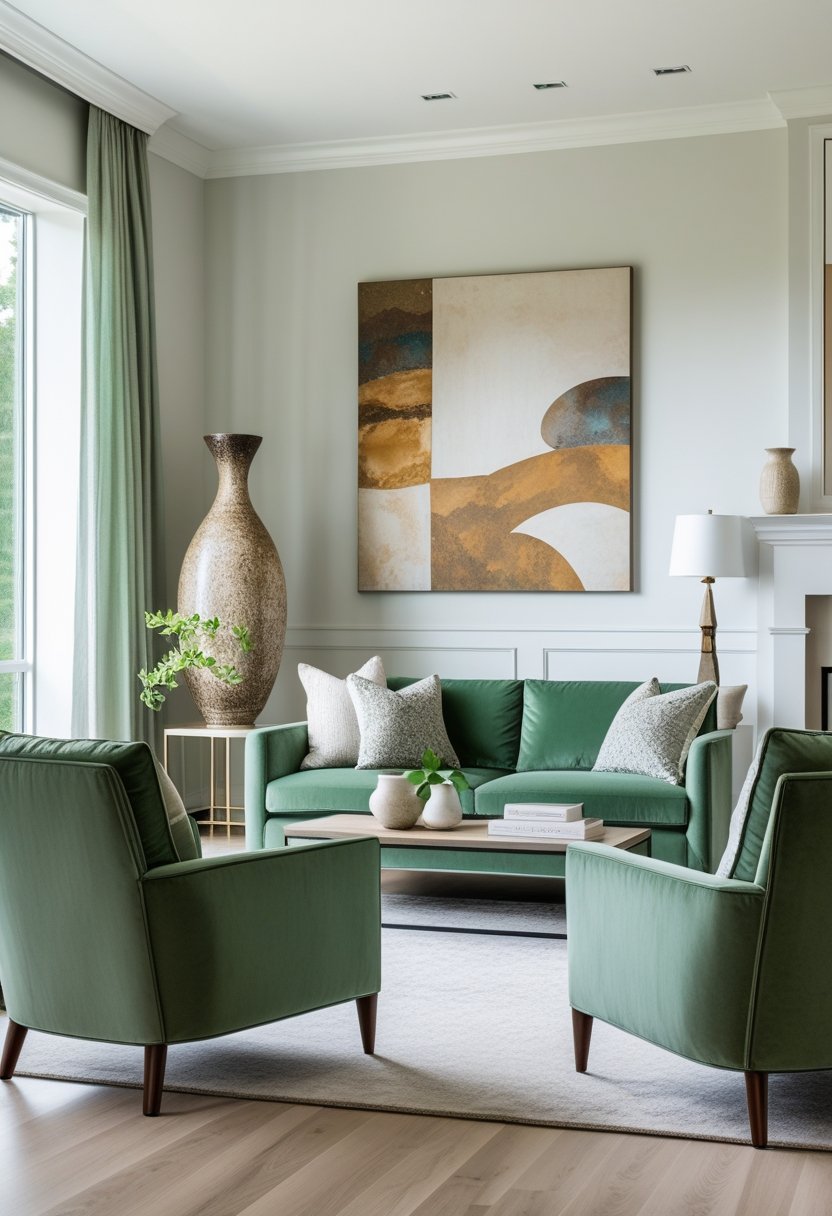
This design blends soft, textured furniture with carefully chosen statement pieces to build depth and interest. It balances vintage charm with modern touches, ensuring each element adds to the room’s serene and sophisticated vibe.
Plush Sage Green Sofa Styles
A plush sage green sofa serves as an anchor piece in this decor. Popular styles include tufted designs and clean-lined mid-century shapes, which combine comfort with elegance. The fabric is usually velvet or linen, emphasizing softness while reinforcing the muted green‘s calming effect.
Sofas with tufted cushions bring subtle texture, while soft curves enhance the welcoming feel. Pairing this seating with neutral-toned throws or pillows can maintain balance without overwhelming the color scheme.
Choosing Modern and Vintage-Inspired Rugs
Vintage-inspired rugs in muted earth tones and intricate patterns complement the sage green palette. These rugs add warmth and artistic detail, balancing the simplicity of the furniture.
Modern rugs with abstract or geometric designs also work well, especially when they incorporate sage or similar greens subtly. A textured rug can ground the room and introduce tactile interest without competing with other decor.
Enhancing with Botanical or Metallic Accents
Botanical chandeliers introduce an organic element that ties the space to nature. Their delicate design and greenery echo the sage theme and provide visual lightness above seated areas.
Metallic accents, such as brushed gold or matte black light fixtures and decorative pieces, add sophistication. These metals contrast against the soft green to create focal points and refine the room’s aesthetic without detracting from its calm ambiance.
Bringing in Nature: Wooden Accents and Indoor Plants
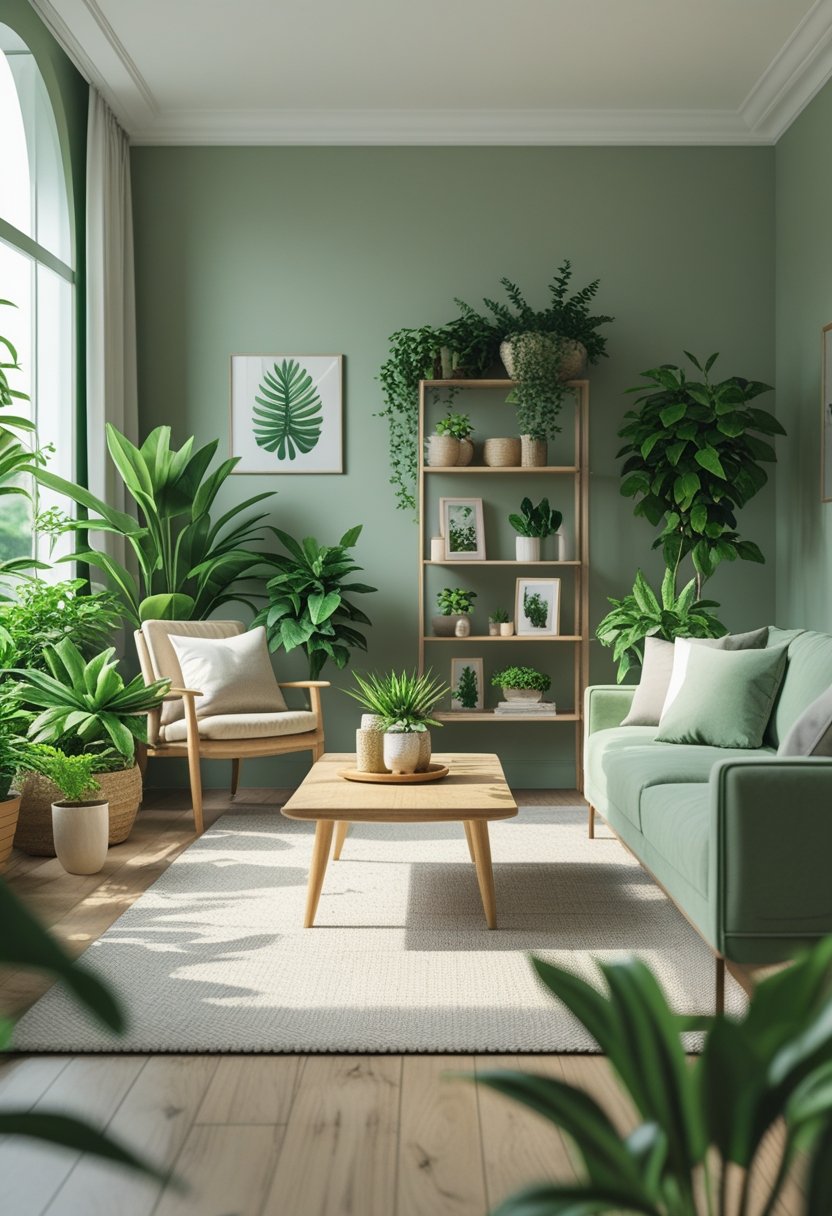
Wooden elements and indoor plants add texture, warmth, and vitality to a sage green living room. Thoughtfully chosen wood accents bring subtle contrast while maintaining a cohesive neutral base. Strategically placed potted plants introduce life and promote a tranquil environment, especially when complemented by ample natural light.
Incorporating Wooden Furniture
Natural wood accents in furniture help ground the monochromatic green palette. A wooden coffee table with a light wood finish contrasts softly against sage upholstery without overpowering the space. Pieces crafted from oak, maple, or ash offer durability paired with organic appeal.
Choosing furniture with clean lines and minimalistic design emphasizes the room’s modern tone. Wooden side tables or shelving units provide functional beauty and increase textural interest. Incorporating varying wood tones—such as a medium-toned chair frame—creates depth without breaking the calm mood.
Selecting and Styling Indoor Plants
Indoor plants are essential for adding freshness and reinforcing the botanical theme. Tall leafy plants like fiddle leaf figs or rubber plants bring height and drama near corners or windows. Smaller potted plants such as succulents or snake plants complement seating areas and shelves.
Using simple ceramic or terracotta pots maintains a natural look without distraction. Grouping plants of different sizes and textures can form an attractive focal point. Ensuring plants thrive with appropriate watering and light conditions contributes to a consistently vibrant atmosphere.
Natural Light for a Fresh Feel
Maximizing natural light enhances both wooden elements and indoor plants. Sheer sage curtains softly diffuse sunlight, maintaining brightness without glare. Ample daylight highlights the textures of wood furniture and the rich hues of plant foliage.
Positioning seating or plants near windows encourages interaction with nature’s rhythm. Light-reflecting surfaces such as a mirror or light wood flooring amplify sunlight, creating an airy and open ambiance. Consistent exposure to natural light supports plant health and helps the room feel inviting.
Functional and Inviting Living Spaces
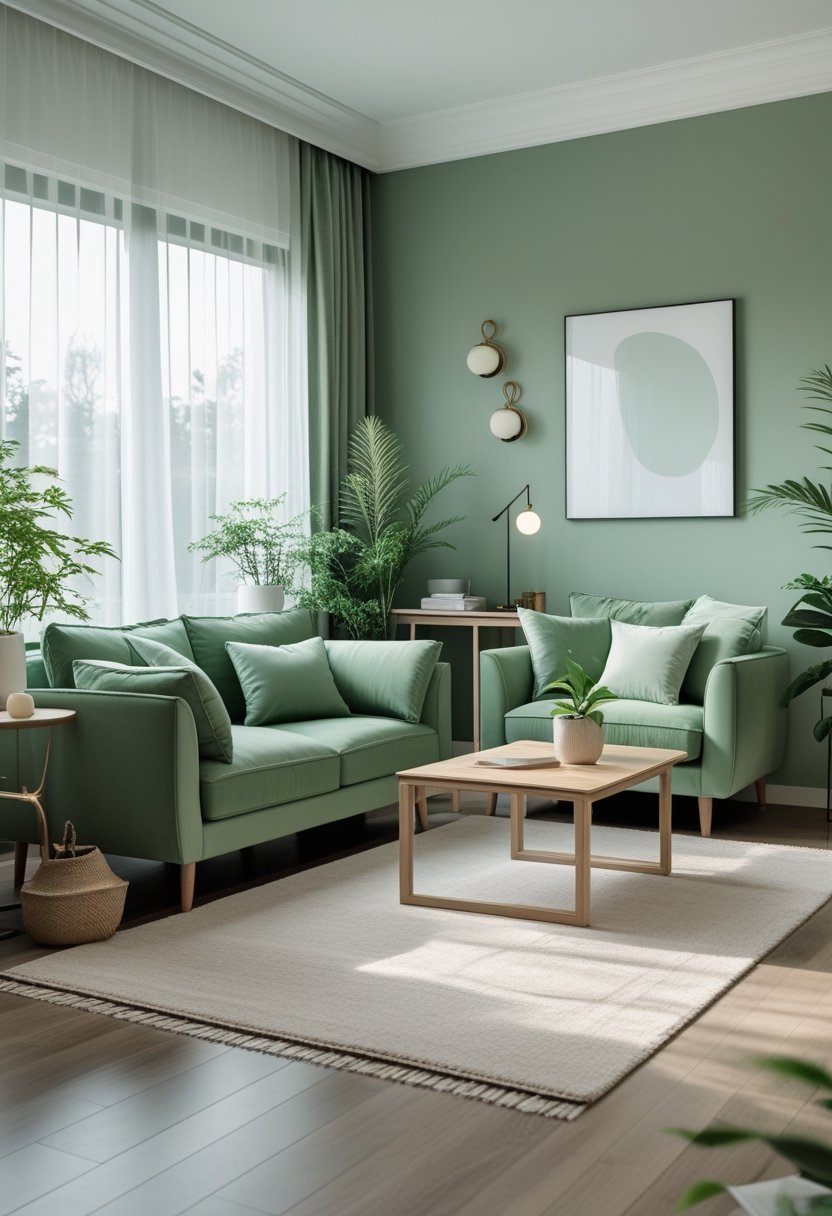
A well-designed living space must balance comfort, style, and practicality. Achieving this includes crafting cozy corners for relaxation, defining areas that reflect personal taste, and integrating smart storage solutions that complement the overall decor.
Cozy Reading Nook Ideas
A cozy reading nook invites quiet moments and relaxation within the living room. Placing a plush armchair or a tufted chaise in a corner with ample natural light enhances comfort. Adding textured throws and pillows in matching sage green hues deepens the layered, monochromatic feel.
Incorporating a vintage-inspired side table or a minimalist lamp with warm lighting creates an inviting ambiance. Woven baskets nearby provide stylish storage for books or blankets without disrupting the serene palette. The nook should feel like a seamless extension of the sage green scheme, fostering a calm, personal retreat.
Creating a Stylish Retreat
A stylish retreat within the living room can elevate the atmosphere by combining functional seating with elegant touches. Tufted sofas or loveseats in sage green paired with warm-toned accent chairs balance softness with structure, creating a comfortable yet polished look.
Textures such as velvet upholstery and soft, woven rugs add richness and visual interest. Incorporating a botanical chandelier draws the eye upward and strengthens the natural theme. This setup allows for both social gatherings and quiet relaxation, ensuring the space serves multiple needs without sacrificing cohesion.
Floating Shelves and Storage Solutions
Floating shelves offer streamlined storage that maintains an open, airy feel. Installing them in sage green or neutral shades blends storage with style. These shelves can display curated decor, plants, and books, reinforcing the serene environment.
Woven baskets placed on lower shelves provide practical, concealed storage for items like throw blankets or small electronics. This approach keeps the room organized without cluttering the visual flow. The combination of floating shelves and woven baskets supports a functional yet inviting space that remains true to the color-drenched, sophisticated aesthetic.
Adaptable Styles: From Minimalist to Modern Farmhouse
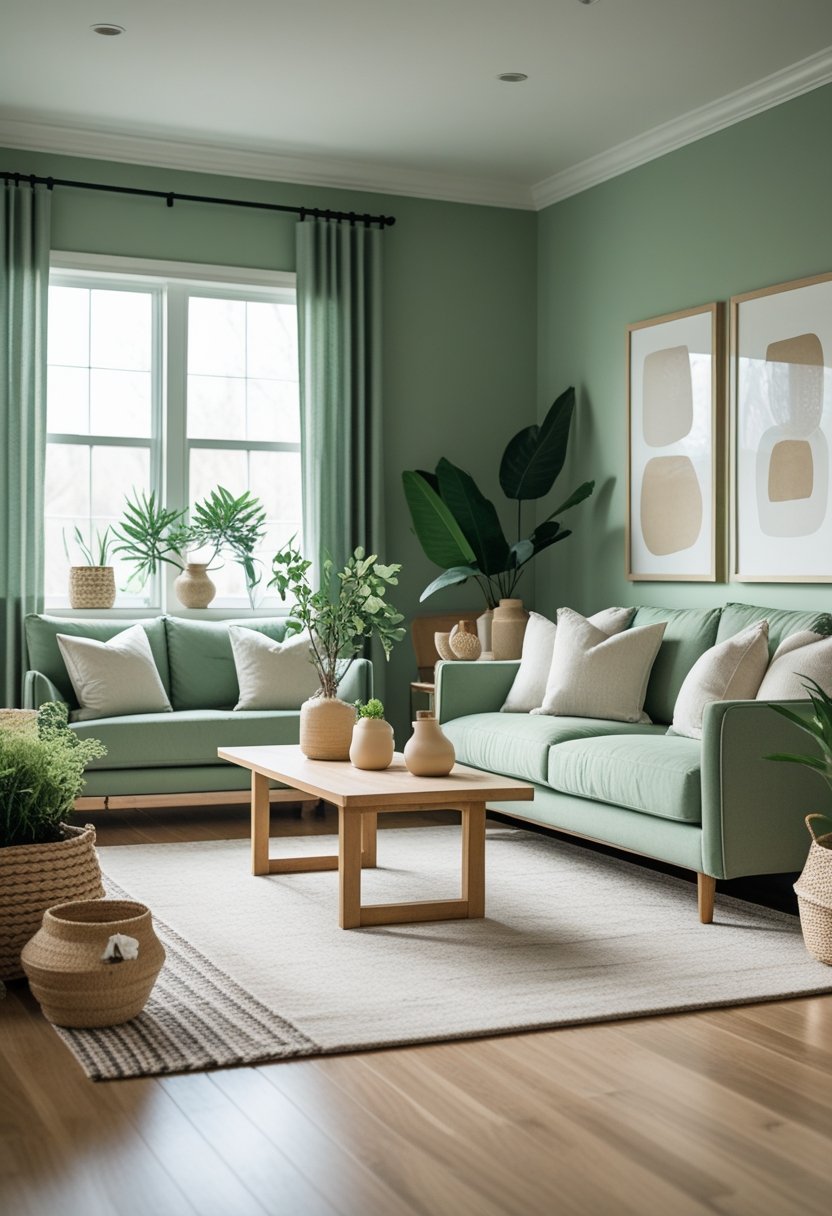
This sage green living room design lends itself well to varied interior styles, emphasizing clean lines, natural textures, and a calm palette. Each approach highlights different facets of sage green’s versatility, whether through pared-down simplicity or cozy, layered details.
Minimalist Aesthetic in Sage Green
The minimalist aesthetic uses sage green as a subtle accent within a restrained color scheme. Light sage walls paired with white or cream elements maintain brightness and openness. Furniture is streamlined, often with tufted or smooth upholstery to add quiet texture without clutter.
Decor is limited to a few impactful pieces such as a vintage-inspired rug or a botanical chandelier, creating focus and balance. The goal is a stylish sanctuary that feels calm and uncluttered, where texture and tone replace excessive decoration. This approach suits those who prefer modern simplicity yet want warmth and gentle color infusion.
Modern Farmhouse Inspiration
In modern farmhouse living rooms, sage green blends rustic charm with refined comfort. Matte sage walls or accent pieces complement materials like natural wood, stone fireplaces, and leather seating. These elements ground the room in tradition while the soft green voice refreshes the palette with a muted natural tone.
Tufted seating and vintage rugs enhance the cozy atmosphere. The decor combines farmhouse classics—such as lanterns or rugged wooden furniture—with contemporary touches like sleek lines and open layouts. Large windows and natural light highlight the color’s organic feel. This style suits those seeking an inviting, lived-in look with modern polish.
Contemporary and Eclectic Approaches
Contemporary living rooms use sage green in more experimental but still cohesive ways. It can serve as a grounding color amid bolder accents or unusual textures. Mixing a botanical chandelier with sleek metal or glass furnishings introduces complexity without chaos.
Layering multiple shades of sage with grays, creamy whites, and soft neutrals brings depth. The eclectic style integrates vintage and modern elements, balancing sophisticated and playful touches. Tufted furniture might contrast with abstract art or industrial lighting. This flexibility supports creative expression while keeping the room unified and tranquil.
| Style | Key Features | Typical Materials & Decor |
|---|---|---|
| Minimalist | Streamlined, few pieces, calm sanctuary | White/cream, tufted upholstery, vintage rugs |
| Modern Farmhouse | Cozy, rustic charm with modern polish | Wood, stone, leather, matte sage walls |
| Contemporary & Eclectic | Bold accents, layered texture | Mixed metals, glass, abstract art, botanicals |