Wall Clock Design Ideas for Modern and Functional Spaces.
Wall clock design plays a crucial role in both functionality and aesthetics within a space. It goes beyond simply telling time, acting as a decorative element that can define the style of a room. A well-chosen wall clock balances form and function, complementing room decor while providing a clear and easy-to-read time display.

Modern wall clocks often feature minimalist shapes and materials, favoring simplicity that fits clean, contemporary spaces. Meanwhile, rustic or artistic designs can create focal points that add character and warmth. The choice of materials, color, and size influences how the clock interacts with other elements in the room.
Design trends now embrace versatility, allowing clocks to blend into various settings, from offices to living rooms. Unique DIY options and oversized models provide additional opportunities to personalize decor without sacrificing utility.
Understanding Wall Clock Design

Wall clock design blends functionality with aesthetics to serve both practical timekeeping and decorative purposes. It involves selecting appropriate styles, materials, and sizes to fit specific interior environments. Understanding these aspects helps in choosing a wall clock that complements and enhances a room’s overall look.
What Is Wall Clock Design?
Wall clock design refers to the deliberate creation of clocks intended for display on walls with focus on both utility and visual appeal. It goes beyond basic timekeeping to include style elements that reflect specific themes or moods.
Designers consider factors like the clock face, hands, and frame. Styles can range from classic analog clocks with minimalistic dials to industrial clocks featuring visible gears or large, bold numerals. Materials vary from metal and wood to plastic or glass, influencing the clock’s weight and look.
A well-designed wall clock integrates seamlessly with room decor, balancing visibility for time reading and decorative impact. Placement and size also play vital roles in its design, affecting how the clock interacts with surrounding space.
Key Elements of Wall Clock Design
Several components determine the success of a wall clock’s design:
- Dial and Numerals: Clear, readable numerals or markers are essential. Options include Roman numerals, Arabic numbers, or simple lines.
- Hands: The length and style of the minute and hour hands affect legibility and style. Sleek hands suit modern designs, while ornate hands fit vintage looks.
- Frame and Material: The clock’s frame sets its character. Metals like brass or iron suggest industrial or vintage designs, while wood offers warmth and classic appeal. The choice affects durability and weight.
- Size and Proportion: Size must suit wall space and viewing distance. Oversized clocks create bold focal points, whereas smaller clocks blend subtly into a room.
- Movement Type: Quartz movements provide accuracy and low maintenance, while mechanical or gear-driven clocks often emphasize design with visible workings.
Combining these elements thoughtfully results in clocks that serve as functional timepieces and impactful decor pieces.
Popular Styles of Wall Clocks
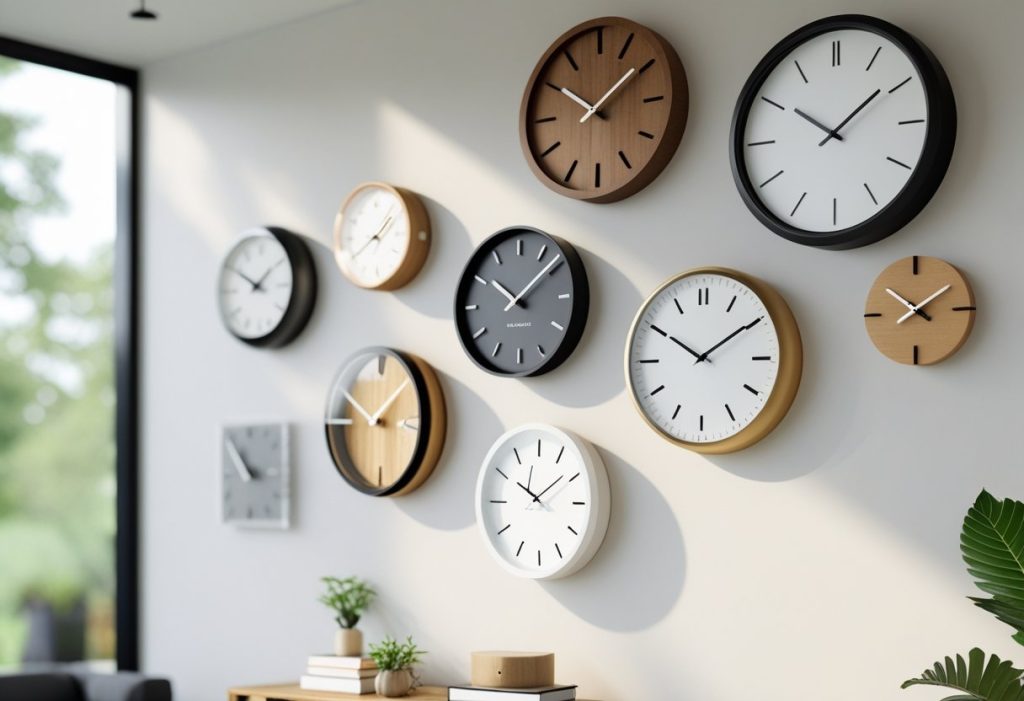
Wall clocks come in distinct styles that cater to various design preferences and functional needs. Among these, the modern and vintage categories stand out for their popularity, combining both aesthetic appeal and practical features suited to different spaces.
Modern Wall Clocks
Modern wall clocks emphasize clean lines, minimalism, and innovative materials. They often use metal, glass, or sleek plastics to create a streamlined look that fits well in contemporary homes and offices. These clocks prioritize clear, simple numerals or even omit numbers for a minimalist face.
Many modern clocks incorporate technology such as silent movements or smart features that connect to devices for synchronized timekeeping. They focus on functionality without compromising style, serving as both a clock and a decorative piece. Shapes can range from geometric forms like circles and squares to abstract designs.
Vintage and Antique Wall Clocks
Vintage wall clocks bring character through classic designs and craftsmanship often using wood, brass, or ornate metalwork. Antique clocks can feature pendulums, Roman numerals, and intricate detailing that reflect a bygone era.
Such clocks serve as statement pieces, blending nostalgia with elegance. They work well in traditional, rustic, or eclectic interiors. Many collectors value these clocks for their historical significance as well as their decorative charm. Maintenance might include occasional winding or careful cleaning to preserve their functionality and appearance.
Materials Used in Wall Clock Design

Wall clocks are crafted from various materials, each affecting durability, appearance, and style. The choice of material helps define a clock’s character and suitability for different interiors. Key options include wood for warmth and tradition, metal for strength and modernity, and glass or crystal for elegance and clarity.
Wood
Wood is a popular material for wall clocks due to its timeless aesthetic and versatility. It is often used in traditional and rustic designs, bringing natural warmth to spaces such as living rooms, lobbies, and offices.
Wood types vary from light, softwoods like pine to dense hardwoods such as oak or walnut. These variations influence the weight and finish of the clock. Wood can be stained, painted, or left natural to complement surrounding décor.
Sustainably sourced or reclaimed wood is increasingly favored to align with eco-conscious interior design trends. Wooden wall clocks typically require moderate maintenance to preserve their appearance and prevent warping from humidity.
Metal
Metal clock designs stand out for their durability and sleek, industrial look. Common metals include aluminum, steel, and iron, often finished with powders, paints, or patinas to add texture and color.
Metal allows for minimalist, modern, and artistic styles that fit well in contemporary or urban interiors. Clocks made from recycled metals appeal to those valuing sustainability without compromising on robustness.
The material’s strength supports larger and thinner clock faces. Metal clocks are low-maintenance but can show scratches or rust if exposed to moisture improperly. The cold, reflective quality of metal contrasts sharply with softer materials, adding visual interest to wall clock designs.
Glass and Crystal
Glass and crystal are prized for their clarity and ability to enhance the clock’s face visibility. These materials are often combined with wood or metal frames for a refined look.
Glass is common in clock covers or panels, protecting hands and mechanisms while adding a sleek surface that is easy to clean. Crystal, while less common, is used in luxury clocks to provide high-quality optical clarity and elegance.
Both materials allow for intricate designs to be showcased without distraction. Glass and crystal require careful handling to avoid breakage, making them ideal for environments where physical impact is minimal. Their transparency complements minimalist and modern wall clock styles.
Functionality and Features

Wall clocks combine practical timekeeping with design choices that affect usability and convenience. Key aspects include how time is displayed, the movement mechanism, and any modern enhancements that improve accuracy or connectivity.
Analog vs. Digital Wall Clocks
Analog wall clocks display time with hour, minute, and sometimes second hands on a numbered dial. They offer a classic look and are often chosen for aesthetic reasons. Their readability depends on dial size and contrast; larger numbers improve visibility from a distance.
Digital wall clocks show time numerically, typically with LED or LCD displays. They provide precise time at a glance and often include features like alarms, calendars, and temperature displays. Digital clocks usually require less maintenance, as they lack moving parts compared to analog clocks.
Users choosing between the two should consider style preferences, setting (e.g., office vs. living room), and whether additional data like date or temperature is useful.
Silent and Sweep Mechanisms
Traditional wall clocks often use a ticking mechanism, where the second hand moves in discrete steps. This can create noise that some find distracting in quiet environments.
Silent or sweep mechanisms allow the second hand to move smoothly without audible ticks. This feature is valuable in bedrooms, study rooms, and offices where minimal noise is preferred. Sweep movements typically rely on quartz technology, known for better accuracy.
Choosing a silent clock improves comfort in noise-sensitive areas while maintaining precise timekeeping, making it popular in modern wall clock designs.
Smart Wall Clocks
Smart wall clocks integrate connectivity and automation beyond basic timekeeping. Some sync automatically with internet time servers to maintain exact accuracy without manual adjustments.
Additional features may include Bluetooth or Wi-Fi connectivity, allowing synchronization with smartphones, integration with smart home systems, and notifications displays. Some smart clocks adjust brightness based on ambient light or offer voice control compatibility.
These clocks suit tech-savvy users seeking convenience and enhanced functionality. However, they often require power sources beyond batteries, such as USB or AC adapters.
Choosing the Right Wall Clock for Your Space

Selecting a wall clock involves balancing function and design to fit a specific environment. Factors like where the clock will hang, its size relative to the wall, and how its color and style align with the room’s decor all impact the choice.
Room Placement Considerations
The location of a wall clock influences both its visibility and decorative impact. It should be placed at eye level where it can be easily seen from key points in the room, such as opposite seating areas or near entryways.
Walls that are large and bare are excellent candidates as they allow the clock to become a focal point. Conversely, in rooms with cluttered walls or multiple artwork pieces, a subtler clock design may better complement without overwhelming the space.
Lighting is also important. Clocks placed in well-lit areas are easier to read and enhance the room’s ambiance. Avoid placing clocks where glare or shadows obstruct the dial, such as directly opposite windows or bright light fixtures.
Size and Scale
Size must be proportional to the wall and room dimensions. A large clock suits spacious rooms with broad walls, while smaller clocks work better in compact spaces or narrow walls.
For example, in a living room with a 10-foot wall, a clock with a diameter of 20-30 inches provides balance without overpowering the space. In tighter areas like kitchens or hallways, clocks around 10-15 inches are more appropriate.
It helps to consider the clock face size and frame thickness; large faces improve readability, especially in bigger rooms. Matching clock proportions to furniture and other wall elements preserves harmony in design.
Color and Aesthetics
The clock’s style should blend with the room’s decor rather than clash with it. For modern interiors, sleek designs with neutral colors or monochrome schemes work well. Traditional rooms benefit from classic wood tones or vintage finishes.
Color matching or contrasting can be deliberate. A clock with bold colors can create a statement piece in a minimalist space, while muted tones maintain subtlety in eclectic or rustic designs.
Texture and material also affect the overall look. Metal, wood, glass, or painted finishes contribute different visual and tactile qualities that support the room’s theme. Coordinating these elements ensures the clock enhances both function and design.
Wall Clock Decoration and Customization

Wall clocks can be both functional and decorative. They provide a central visual element that can reflect personal taste and complement the room’s overall design. Customizing and displaying clocks thoughtfully enhances the atmosphere and adds character.
Creative Display Ideas
Clocks can be displayed beyond just hanging on a wall. Grouping multiple clocks of different sizes and styles creates a dynamic feature wall, useful for brighter rooms or offices.
Using thematic arrangements, like vintage clocks in a rustic kitchen or sleek, minimalist designs in modern living spaces, aligns the clock with the room’s style. Wall clocks can also serve as focal points, framed by complementary artwork or lighting.
In kitchens or dining areas, clocks can integrate functional design by combining with chalkboards or memo boards for notes and reminders. Experimenting with shapes—round, square, even heart-shaped clocks—adds variety.
Personalized and Custom Designs
Custom wall clocks allow users to incorporate personal photos, artwork, or quotes directly onto the clock face. This customization uses images that resonate, such as family photos or meaningful symbols, making the clock a unique statement piece.
Materials can also be tailored, from traditional wood and metal to acrylic or canvas, creating tactile and visual variety. Some designs include non-ticking mechanisms, making them suitable for quiet areas like bedrooms or offices.
Online tools enable simple customization, letting users upload images and preview their clock before ordering. This straightforward approach supports a perfect fit with the intended décor, whether for gifts or personal use.