
Rustic Driveway Design with Stone Pillars and Lighting
An elegant driveway design can significantly enhance a home’s curb appeal by combining natural materials and thoughtful lighting. Rustic stone pillars create a timeless entryway, while ambient lantern lighting adds both safety and a warm, inviting glow. Lush garden landscaping complements these elements, weaving nature seamlessly into the overall aesthetic.

The addition of a covered carport balances sophistication with practicality, offering protection for vehicles without disrupting the driveway’s cohesive style. This design approach appeals to those who value both classic architecture and functional, attractive outdoor spaces. Creating a driveway that blends rustic charm with modern elegance elevates the home’s exterior and welcomes guests with lasting appeal.
Key Elements of an Elegant Driveway Transformation

An elegant driveway balances structure, lighting, and greenery to create a welcoming and refined entrance. Thoughtful materials and design choices contribute directly to enhanced curb appeal and a cohesive aesthetic.
Rustic Stone Pillars for Lasting Character
Rustic stone pillars serve as both functional supports and striking visual anchors at the driveway entrance. Their natural texture and earthy tones add depth and durability, complementing traditional and timeless architectural styles.
These pillars frame the approach to the home, offering a sense of permanence and craftsmanship. Selecting locally sourced or hand-cut stones enhances authenticity while blending the driveway seamlessly with the surrounding landscape. Proper mortar and installation ensure stability against weather and wear.
Stone pillars also provide anchor points for gates or lanterns, increasing both security and aesthetics without overpowering the driveway’s overall design.
Ambient Lantern Lighting for Inviting Ambiance
Lantern lighting along the driveway provides essential illumination and a warm, inviting atmosphere after dark. Fixtures should be placed strategically near pillars and along pathways to highlight architectural features and guide visitors safely.
Choosing lanterns with a rustic or classic design ties lighting to the stonework, maintaining styling consistency. Soft, amber-toned bulbs reduce glare and enhance the natural tones of stone and vegetation.
Energy-efficient LED options can simulate traditional light warmth while minimizing maintenance and electricity consumption. Timers or smart controls add convenience and ensure lighting functions seamlessly at dusk and dawn.
Lush Garden Landscaping to Soften Edges
Lush garden landscaping frames the driveway with greenery that softens hard edges and brings natural vibrancy. Layered plantings including shrubs, flowering perennials, and groundcovers create texture and seasonal interest.
Plants with varying heights and colors along the driveway’s borders highlight its shape while screening adjacent areas, improving privacy. Drought-tolerant species or native plants reduce water use and upkeep.
Integrating low hedges or ornamental grasses beside stone pillars bridges built elements and nature. Mulched beds and discreet irrigation support healthy growth without detracting from the driveway’s neat, elegant appearance.
Selecting the Best Driveway Material

Choosing the right driveway material involves balancing durability, maintenance, and style. Practical considerations such as water drainage, visual appeal, and integration with architectural features also play important roles. Each option offers distinct characteristics that suit different design goals and environmental needs.
Permeable Pavers for Sustainability
Permeable pavers allow water to pass through gaps or porous surfaces, reducing runoff and promoting groundwater recharge. This makes them ideal for areas with strict stormwater management requirements or homeowners prioritizing eco-friendly solutions.
They come in various shapes and colors, enabling customized patterns that complement rustic stone pillars and lush gardens. Maintenance is straightforward, involving occasional clearing of debris from joints to ensure proper permeability. These pavers can withstand typical vehicle loads while enhancing curb appeal with a natural look.
Gravel Driveway Options and Benefits
Gravel driveways are cost-effective and easy to install, offering excellent drainage and a rustic aesthetic that pairs well with garden landscaping. They require periodic replenishing and leveling to maintain smoothness and appearance.
Available in different sizes and colors, gravel allows homeowners to customize the driveway’s texture and tone. It is especially suitable for circular driveways where flexibility in shape and low installation complexity matter. Gravel’s loose surface is forgiving in harsh weather, minimizing damage compared to rigid materials.
Incorporating Modern Driveways with Timeless Features
Modern driveways often focus on clean lines, low maintenance, and durability. Materials like concrete, stamped concrete, or large-format pavers provide smooth, uniform surfaces resistant to weather extremes.
To maintain timeless appeal, these materials can be combined with rustic elements such as stone pillars or natural landscaping. Adding light-colored options helps reflect sunlight, keeping the driveway cooler. Modern designs often feature minimalist layouts that blend seamlessly with classic architectural details, creating a sophisticated transition from driveway to home.
Using Circular Layouts for Functional Beauty
Circular driveways optimize traffic flow and enhance curb appeal by providing an inviting entryway. They are compatible with various materials including permeable pavers, gravel, and concrete.
Details like stone pillars flanking the entrance add structure and frame the space elegantly. Circular layouts support landscaping integration, allowing for planting beds or ambient lighting fixtures that further highlight the driveway’s design. Their shape enables efficient vehicle movement without reversing, improving functionality while maintaining aesthetic balance.
Integrating a Sophisticated Covered Carport

The design of a covered carport can elevate the driveway’s overall appeal by merging well-crafted architectural elements with the surrounding landscape. Selecting the right materials and style ensures durability while complementing both the home and natural setting.
Blending Architecture With Nature
A covered carport that aligns with rustic stone pillars and ambient lantern lighting creates cohesion between built and natural features. Incorporating organic elements such as exposed wood beams or rough-hewn stone helps the structure feel rooted in its environment.
Positioning the carport within the garden landscaping allows for seamless transitions between green spaces and functional areas. Using low-profile roofs or gentle curves can soften the carport’s presence while maintaining elegance.
Lighting plays a vital role. Placing lantern-style fixtures along the driveway and near pillars enhances safety but also highlights the rustic details. This subtle illumination invites visitors while preserving the warm, natural atmosphere.
Choosing Materials for Durability and Aesthetics
Materials for the carport should withstand weather while aligning with the home’s timeless design. Stone pillars provide structural strength and visual texture, anchoring the overall driveway layout.
Wood elements such as cedar or redwood, treated for outdoor use, balance ruggedness and refinement. Metal roofing with a natural matte finish reduces glare and complements stone without overpowering it.
Polycarbonate blends or durable composites can be used for roofing to allow light penetration while protecting from elements. Their longevity reduces maintenance needs, making them practical for a lasting installation.
A table of recommended materials:
| Component | Material Options | Benefits |
|---|---|---|
| Pillars | Natural stone, brick | Strength, visual weight |
| Roofing | Metal, polycarbonate, wood shakes | Durability, aesthetic flexibility |
| Structural frame | Treated wood, steel | Stability, design compatibility |
Selecting materials thoughtfully ensures the covered carport adds sophistication and lasting value to the driveway design.
Enhancing Outdoor Ambiance With Lighting

A carefully planned lighting scheme brings out the elegance of the driveway while emphasizing architectural and landscape details. The right lighting enhances safety and creates a warm, inviting atmosphere after dark.
Lantern Lighting Techniques
Lanterns placed on rustic stone pillars serve as focal points and provide soft, ambient light. Using warm LED bulbs within lanterns maintains a cozy glow without harsh brightness.
Mounting lanterns at eye level or slightly above ensures balanced illumination and prevents glare. Incorporating dimmers can adjust intensity based on activity or time of night.
Metal finishes like wrought iron or bronze complement the rustic pillars, tying lighting and architecture together visually. Lanterns with glass panels protect bulbs and diffuse light evenly, enhancing visual appeal and longevity.
Complementary Pathway and Garden Lights
Pathway lights guide visitors safely while accentuating natural curves and edges. Low-profile fixtures with downward-facing LEDs reduce light pollution and minimize glare.
In garden beds, well-placed spotlights highlight lush planting and texture. Combining soft uplighting with subtle ground lighting creates depth and dimension in landscaping.
Using energy-efficient fixtures on timers or motion sensors ensures functionality and energy savings. Consistent color temperature across all outdoor lights maintains a cohesive look that complements the driveway’s design.
Designing with Lush Landscaping

Lush landscaping enhances curb appeal by adding texture and color around the driveway. Thoughtful plant selection and strategic layering create depth, making the entire driveway design feel intentional and inviting.
Selecting Plants for Year-Round Appeal
Choosing plants that provide interest in every season ensures the driveway remains attractive throughout the year. Evergreen shrubs and trees serve as a stable green backdrop during winter, while deciduous plants offer seasonal flowers, foliage color, or berries.
Key plant types to consider:
- Evergreens: Boxwood, holly, and juniper maintain structure and color in all seasons.
- Flowering perennials: Coneflowers, daylilies, and lavender provide seasonal blooms and texture.
- Accent plants: Ornamental grasses or small flowering trees add variety and movement.
Including drought-tolerant and low-maintenance species helps reduce upkeep, maintaining curb appeal without extensive effort.
Layering Shrubs and Trees for Depth
Layering plants in varied heights and textures near the driveway builds visual interest and frames the space effectively. Taller trees or shrubs placed toward the back create a natural boundary, while medium and low-growing plants soften edges closer to pathways or the driveway border.
A simple layering structure could be:
| Layer | Example Plants | Purpose |
|---|---|---|
| Tall Trees | Dogwood, Japanese maple | Define space, add vertical interest |
| Medium Shrubs | Hydrangea, azalea | Provide fullness and seasonal blooms |
| Ground Cover | Pachysandra, creeping thyme | Soften edges, reduce weeds |
This approach highlights the rustic stone pillars and carport by contrasting the solid architectural features with organic shapes and colors. Strategic layering also guides visitors’ eyes toward the entrance while tying the driveway into the surrounding landscape.
Finishing Touches and Maintenance Tips
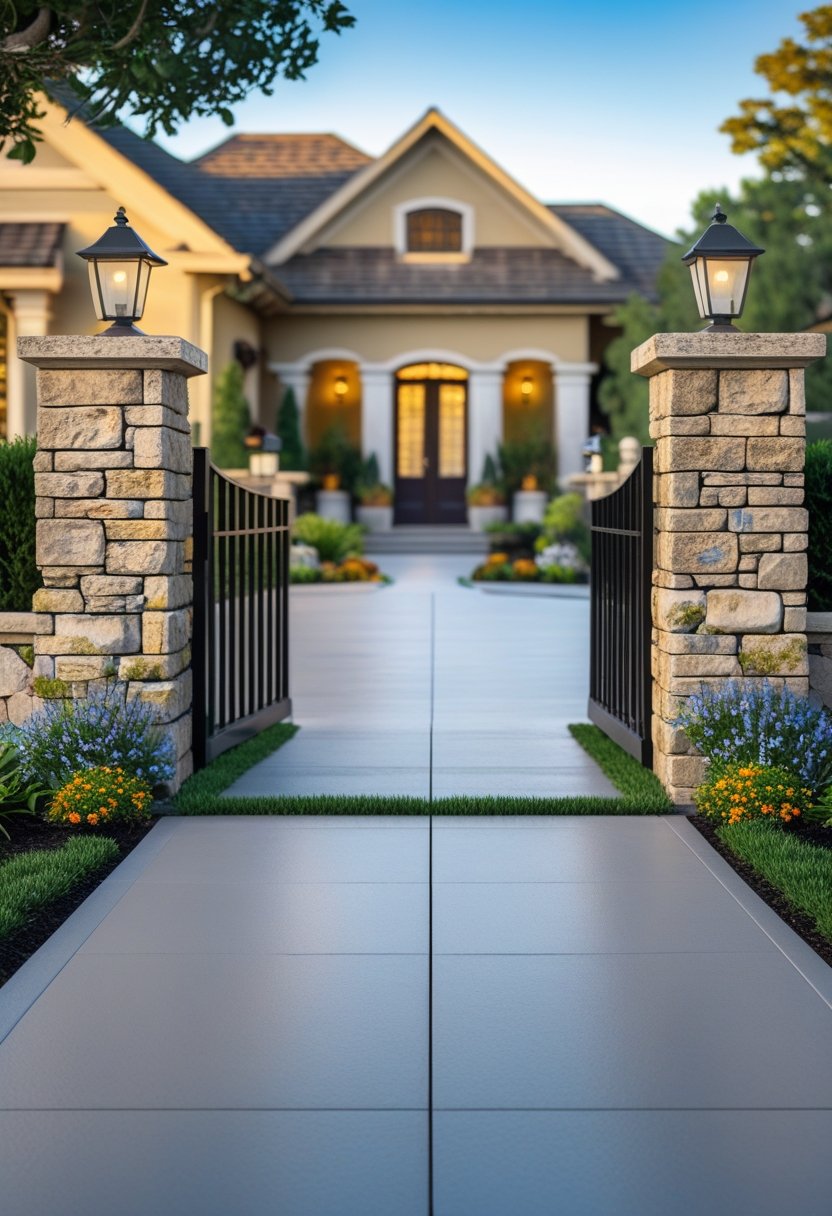
Proper edging and regular upkeep are essential to preserve the driveway’s crispness and the garden’s lush appeal. These details enhance durability and prevent common issues like overgrowth or surface damage.
Driveway Edging for Clean Lines
Clean driveway edges define the overall look and prevent plant overgrowth or soil erosion onto the driveway. Using stone borders or metal edging along asphalt driveways creates a precise separation between hardscape and garden areas.
The edging should be installed flush with the driveway surface to avoid trip hazards. Regularly trimming plants and removing weeds at these boundaries maintains a tidy appearance.
For asphalt driveways, sealing the edges helps prevent cracks caused by moisture seeping under the surface. This prolongs the life of the driveway and preserves its neat outline.
Maintaining Surfaces and Greenery
Keeping the driveway and surrounding landscape in top shape requires scheduled cleaning and care. Pressure washing the driveway every 6 to 8 months removes buildup from dirt, oil, and algae that dull its appearance.
Weekly removal of leaves, twigs, and debris using a push broom or blower prevents staining and slippery surfaces. This is especially important for the rustic stone pillars and lantern lighting, which can accumulate dirt and wear.
Garden plants should be pruned to avoid encroaching onto the driveway or carport area. Seasonal fertilizing and watering keep greenery vibrant and support the natural ambience surrounding the driveway’s elegant design.